
Irritable bowel Syndrome (IBS): A Practical Guide for Clinicians
Irritable Bowel Syndrome (IBS) is one of the most common functional gastrointestinal disorders encountered in clinical practice, yet it remains a diagnosis of exclusion and often misunderstood. It affects 10-15% of the global population, disproportionately impacting quality of life while posing a diagnostic challenge due to symptom overlap with inflammatory bowel disease (IBD).
In this post, we’ll explore the pathophysiology, clinical features, diagnosis, and treatment of IBS with a special focus on dietary interventions (FODMAPs) and pharmacological options for IBS-C (constipation – predominant) and IBS-D (diarrhea- predominant) variants. We’ll also clarify key differences between IBS and IBD, a common source of confusion in clinical settings.
What is IBS?
IBS is chronic functional GI disorder characterized by recurrent abdominal pain associated with altered bowel habits, in the absence of any identifiable structural or biochemical cause.
Rome IV Criteria:
Recurrent abdominal pain, on average, at least 1 day/week in the last 3 months, associated with ≥ of the following:
- Related to defection
- Change in frequency of stool
- Change in form (appearance) of stool
How to asses appearance of stool?
Use Bristol stool chart as shown below
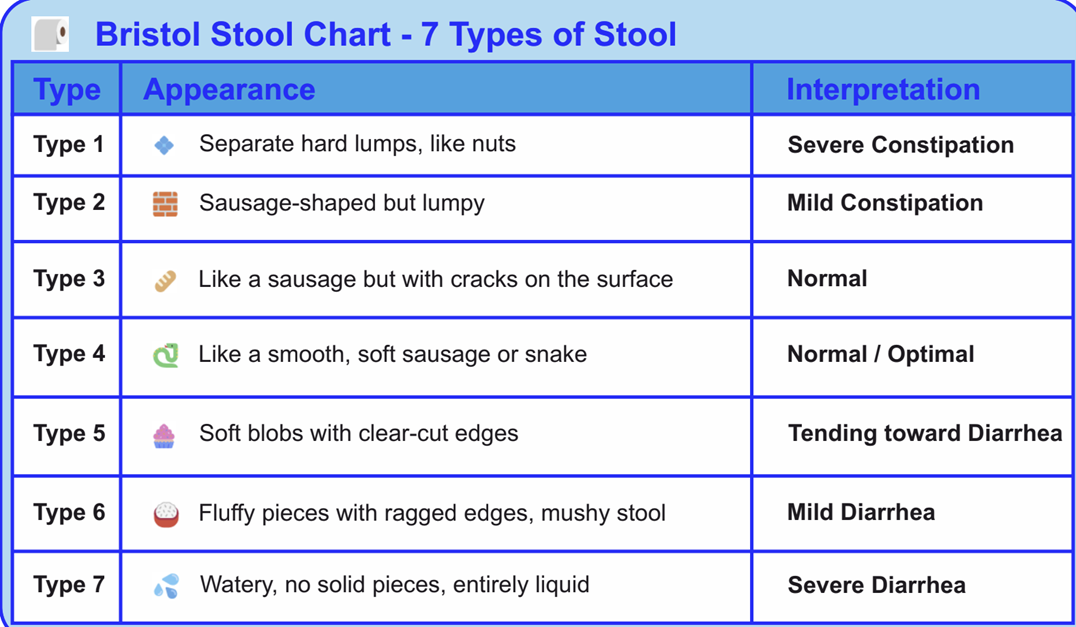
Symptom onset must be at least 6 months before diagnosis.
IBS vs IBD: A common Confusion
| Feature | IBS | IBD (Crohn’s /Ulcerative Colitis)
|
| Nature | Functional disorder | Organic, inflammatory disease |
| Pathology | No mucosal inflammation or ulcers | Mucosal inflammation, ulceration |
| Colonoscopy | Normal | Abnormal (ulcers, erythema, pseudo-polyps) |
| Histology | Normal | Inflammatory infiltrates, granulomas |
| CRP/Fecal Calprotectin | Normal | Elevated |
| Red flag signs | Absent | May have blood in stool, weight loss |
| Risk of colon cancer | No increased risk | Increased risk |
Clinical pearl: Always rule out IBD, colorectal cancer, and celiac disease before labeling a patient with IBS – especially in patients >50 or with alarming symptoms like weight loss, rectal bleeding or nocturnal symptoms.
Pathophysiology of IBS
IBS is multifactorial and still not fully understood. Key contributing factors include:
- Visceral hypersensitivity
- Altered gut motility
- Gut-brain axis dysfunction
- Post – infectious changes
- Microbiota alterations
- Psychological stressors ( anxiety / depression)
Role of Diet: FODMAPs Explained
Many patients with IBS report food -related triggers. The low FODMAP Diet is a central dietary intervention.
What are FODMAPs?
FODMAP= Fermentable Oligosaccharides, Disaccharides, Monosacchrides, and Polyols. These are short chain carbohydrates poorly absorbed in the gut and rapidly fermented by colonic bacteria, causing bloating, gas, and diarrhea.
High FODMAP foods:
- Oligosaccharides: Wheat, rye, onions, garlic
- Disaccharides: Milk, yogurt (lactose)
- Monosaccharide: Apples, Honey (excess fructose)
- Polyols: Sorbitol, mannitol (found in artificial sweeteners, some fruits)
Approach:
- Elimination phase: 4-6 weeks of low FODMAP intake
- Rechallenge phase: Gradual reintroduction to identify specific triggers
- Maintenance phase: Personalized, less restrictive diet
Evidence supports the low FODMAP diet in reducing global IBS symptoms, particularly bloating and abdominal pain.
Pharmacological Management
Tailored according to predominant symptoms:
IBS – C (Constipation – Predominant)
| Drug/ Class | Mechanism | Notes |
| Fiber (e.g. psyllium) | Bulking agent | Soluble fiber preferred over insoluble |
| PEG (Polyethylene glycol) | Osmotic laxative | First- line for many patients |
| Lubiprostone | Chloride channel activator (CIC-2) | Increases intestinal fluid secretion |
| Linaclotide | Guanylate cyclase – C agonist | Enhances fluid secretion and motility |
| Prucalopride | 5-HT4 receptor agonist | Promotility agent; used selectively |
Pro tip: Avoid stimulant laxatives long-term duet to potential for tolerance and cathartic colon.
IBS – D (Diarrhea- Predominant)
| Drug/ Class | Mechanism | Notes |
| Loperamide | µ-opioid receptor agonist | Symptomatic relief only; does not relieve pain |
| Alosetron | 5-HT3 antagonist | Used in woman with severe IBS-D; rare ischemic colitis risk |
| Rifaximin | Non-absorbable antibiotic | Useful in IBS-D with bloating; 2-week course |
| Bile acid sequestrants | Binds bile acids (e.g. cholestyramine) | For patients with bile acid malabsorption |
| Eluxadoline | Mixed opioid receptor modulator | Avoid in patients without gallbladder or with pancreatitis risk |
For pain and global symptoms
| Drug/ Class | Role |
| Antispasmodics | Relieve abdominal cramps (e.g. dicyclomine, hyoscine) |
| Tricyclic Antidepressants (TCAs) | Modulate pain and motility (e.g. amitriptyline) |
| SSRIs/SNRIs | For patients with predominant anxiety or depression |
| Cognitive Behavioral Therapy (CBT) | Especially effective in refractory cases |
Red Flag Symptoms (NOT typically of IBS)
Always investigate further if any of these are present:
- Age >50 with new onset symptoms
- Nocturnal diarrhea
- Unintentional weight loss
- Rectal bleeding
- Iron – deficiency anemia
- Family history of colorectal cancer or IBD
Summary Table: IBS subtypes and management
| Subtype | Key Features | First – line Management |
| IBS-C | Pain + infrequent, hard stools | Fiber, PEG, linaclotide |
| IBS- D | Pain +frequent, loose stools | Loperamide, rifaximin |
| IBS- M | Mixed symptoms | Symptom – directed approach |
| IBS-U | Unclassified | Supportive, individualized |
“The art of IBS management is not in curing, but in relieving symptoms, validating patient concerns, and enhancing quality of life.”